
What is culture? It is all in our heads
In his book “Toyota Culture”, Jeffrey K. Liker makes us think about the word “culture” by listing phrases managers often say: “It’s all about culture”, “It’s a people problem”, “The tools are the easy part; cultural change is the hard part”, “The lean system works in Japan, where it was created, but not in our culture”.
The upside is that these statements reflect the importance each of us attaches to culture and its fundamental role in transforming an organisation into an effective company. The downside is that everyone gives the word “culture” a different meaning.
To analyse how an organisation works internally and understand its business goals or corporate mission, the classic method calls for interviews and for interpreting the answers. It is not a simple process, because you have to decipher what other people are thinking.
A definition of culture
Edgar Schein defines culture as: “The pattern of basic assumptions that a given group has invented, discovered or learned to cope with its problems of external adaptation and internal integration, that have worked well enough to be considered valid and that, therefore, are to be taught to new members as the correct way to perceive, think and feel in relation to those problems”.
In essence, the first levers for tackling and managing cultural change efficiently are: defining and guiding a strategic method of problem setting, implementing a structured problem solving process, and standardising all learning processes (internal and external), training (formal and informal) and hiring.
The three levels of culture
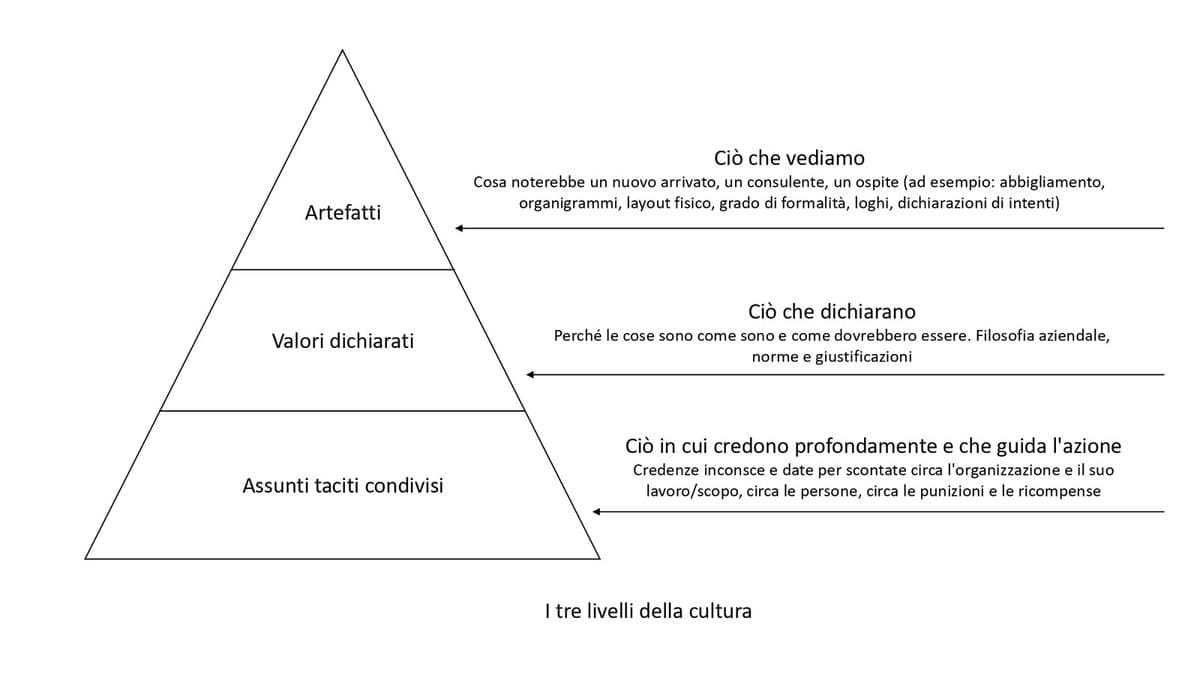
With a structured method, “What we see” can become a rich source of food for thought; this allows us to ask the right questions in order to gather “What is declared”, that is, the unwritten norms that everyone knows and that form the basic rules of behaviour. Digging even deeper, we open up the possibility of understanding the answers to questions such as: “Do we believe that the role of staff is to do their best to help the organisation succeed?”, “Do we think management has its own interests, which conflict with ours, forcing us into a daily struggle to defend ourselves?”, “Do we believe that work is a means of earning money, of making a living, or a means of contributing to society?”
Andon, the classic example
One of the basic assumptions of the Andon system is that people need the support of others to deal with everyday problems. Left on their own, they may manage to get past surface-level issues, but they will not really be able to solve the problem at its root. Another basic assumption is that the fundamental role of employees is to spot difficulties and draw attention to them, even if this means stopping their own work. This requires a climate of trust, in which the question of whether “pulling the Andon” is the right choice does not even arise: people must not fear a reprimand; on the contrary, they may well be praised for having identified a problem.
People are the heart and soul of a company
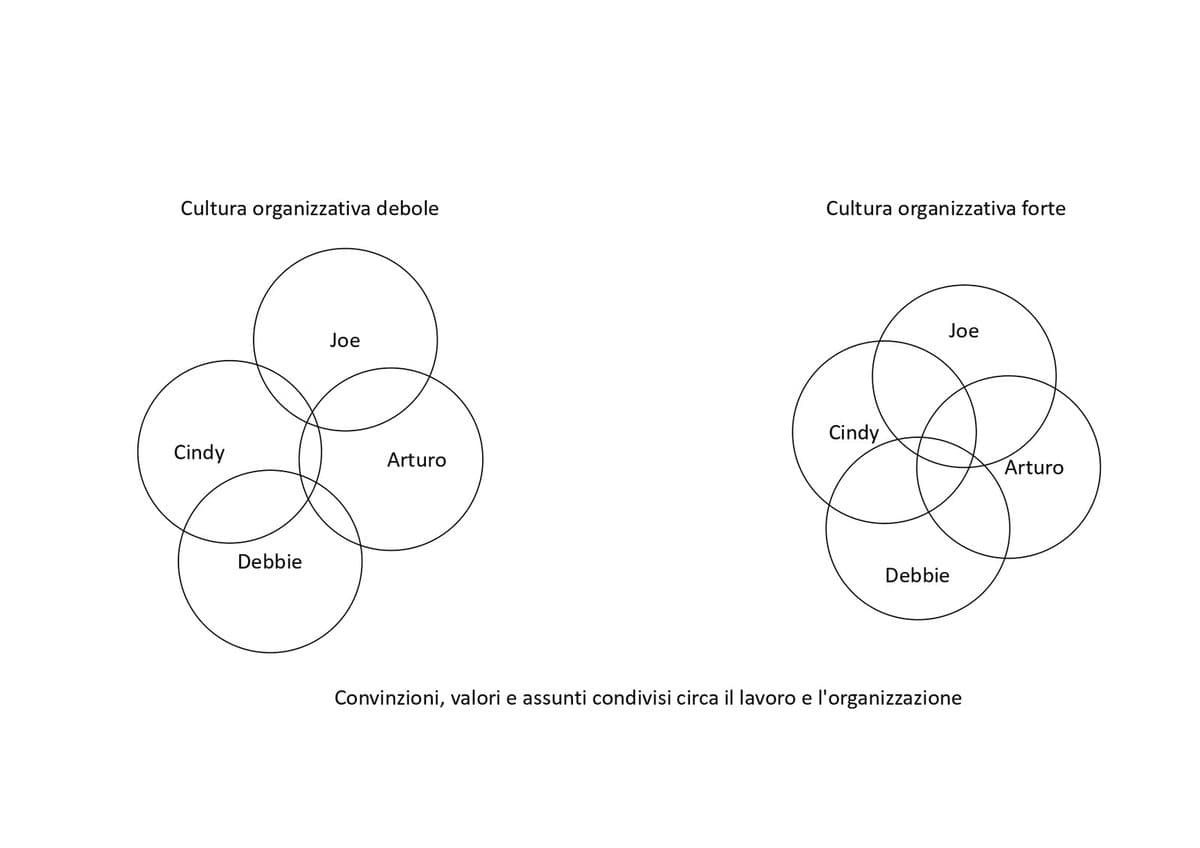
True managers are the leaders who teach all their people to define, analyse, communicate and solve problems, day after day. The more beliefs, values and assumptions are shared, the stronger the organisational culture becomes.
A weak organisational culture is not a problem but a symptom. To integrate new hires effectively, the Toyota Way proposes involving them in work teams in a clean and safe environment, built on constant communication and led by leaders who are there to support and teach.