In many countries, the word metaverse was among the most searched terms on the web between 2021 and 2022. Unlike many other passing hypes or news, political or entertainment stories, interest in this topic seems set to last and grow stronger. The reason why it arouses so much curiosity is probably linked to our recent experience (I am referring in particular to the pandemic that has only just ended) and to our communication habits: “the metaverse ecosystem” has every potential to change our lives.
Just as in the 1990s mobile phones began to shape first the way we communicate and then, gradually, the way we experience our relationships with others, the same effects can be foreseen for this immersive network made up of technologies that allow us to enter a new reality.
A great deal has been written about the evolution of the web and its implications for the daily lives of individuals and societies, and much more remains to be studied and said, since it involves a constantly evolving complexity for human behaviour. The question we ask ourselves, and one that interests entrepreneurs and workers alike, is this: how will the metaverse affect the business world?
Revolution or simply evolution?
As with the advent of the internet or of mobile phones, the question naturally arises as to whether the metaverse will trigger a revolution that carries all its users towards a new system, or whether it is a natural evolution of what we already know. Among the most recent, complete and detailed perspectives is that of Lorenzo Montagna, founder of seconda-stella, a consulting firm in the field of experiential technologies. In his latest book, “Metaverso Noi e il Web 3.0”, published by Mondadori in 2022, the author explores the cultural, economic and social revolution of the metaverse through the metaphor of a journey, a decade-long path towards a new digital dimension.
Like other observers of the phenomenon, Montagna believes that it is unlikely to be an “all at once” process, but rather a step-by-step progression, a journey indeed, through enabling and immersive technologies that will allow us to enter a virtual reality. For now, despite the many promises, very few companies are investing in the metaverse.
The retail world, and more specifically the fashion sector, seems to be the most receptive, but there are still few brands moving clearly in one or more well-defined directions, even when these are opposed to one another; to cite two opposites: Nike is targeting the gaming audience, while Adidas aims to bring customers into its own world so that they too can take part in creating their own style.
What applications for business?
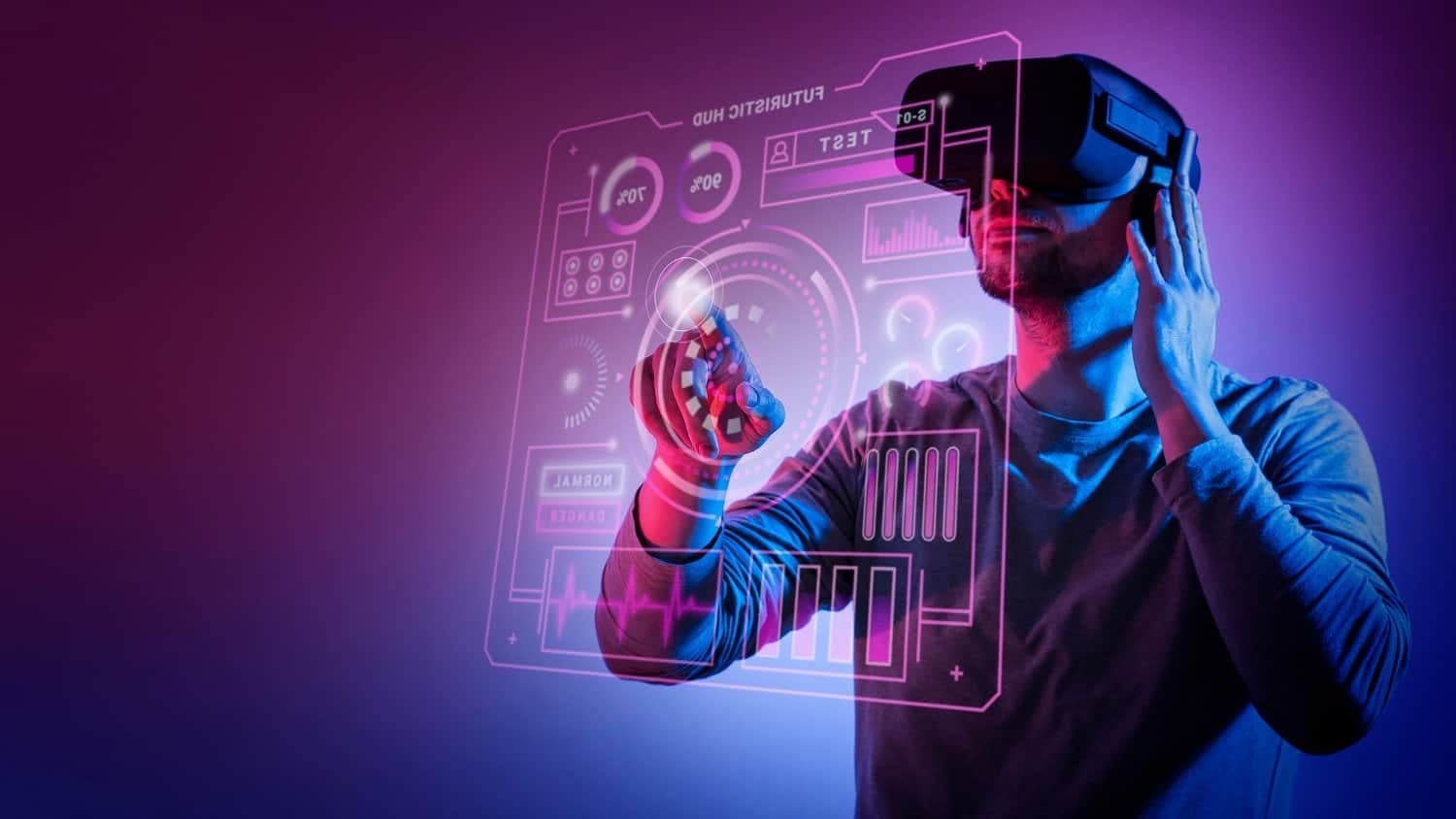
In the coming years, “practical” applications of the metaverse are likely to emerge in the world of business. Here, it is interesting to focus on the possible implications for the management consulting sector, on potential applications in processes and on what it means for workers, women and men alike. We are convinced that there will be many opportunities to simplify and optimise some of the activities involved in supporting and guiding clients towards operational excellence. At present, the technologies being developed most for business seem to be oriented exclusively towards augmented reality, that is, an integration of physical reality and the digital world in which the sensory world is enhanced through technological devices.
The differences between the metaverse, augmented reality and Web 3.0
It should be remembered, however, that AR is not the metaverse, nor is it Web 3.0: it is an enabling technology, not an immersive reality that replaces the real one; if anything, it is a complementary one. For clarity, here is Montagna’s definition of the metaverse: “…it is a digital world, made of open and shared spaces, in which we move physically, in the first person or represented by avatars, to meet other people, to interact with them, with objects and with the surrounding environments…”.
Augmented reality could go a long way towards immersing us in the prospect of a new plant layout, or perhaps help, through wearables, to increase worker safety and efficiency. Successful examples of AR applications can be found in various manufacturing companies such as Boeing, in the healthcare sector and in other industries.
There are two aspects on which questions remain open: communication and the big picture.
The complexity of non-verbal communication
As far as communication is concerned, almost all of us have experienced remote working and drawn important lessons from it, with advantages but also difficulties. Specifically, when we talk about communication, we must remember that only a small part of it is made up of what we say; much of it is instead the product of non-verbal and paraverbal language. Communication relies mainly on non-verbal languages: 38% of a message reaches the other person through tone, rhythm and volume (paraverbal communication), while 55% comes from physiological signals, gestures, proxemics and posture (non-verbal communication). However realistic avatars in virtual reality may be, imitating reality through sensors that communicate with artificial intelligence, how will they be able to fully bring out what is conveyed, consciously or not, in ordinary face-to-face relationships? Non-verbal communication stems largely from unconscious behaviours; however sophisticated it may be, will artificial intelligence be able to keep pace with our minds?
Non-verbal communication is very important in managing a team and in one-to-one meetings, at the individual as well as the organisational level. To an attentive eye, facial expressions and body language can reveal a great deal about the atmosphere in a workplace. Far more than what comes through in the words that are spoken. Words alone will not always be enough to build a clear relationship between people working together towards the same goals.
The need for a big-picture view
By “big-picture view” we mean the ability to grasp the process in all its complexity, not just the detail of a particular problem, a work phase or an event.
Processes are not the result of simply adding up individual elements; rather, they can be compared to the multiplication of numerous input factors which, as they progress, produce an outcome. In the individual elements, generated by any input or, for example, in a work phase, we can observe a great deal of variability (mura), which is the mother of all waste (muda). What happens between the phases of a work cycle that generates added value tends to take up between 70 and 80% of the time, so we could end up with a hyper-efficient operation surrounded by enormous waste.
Being aware of this phenomenon is not enough to eliminate its causes: what is needed is a systematic intervention, a shift in mindset with practical consequences. How will it be possible to programme a reality, whether augmented or virtual, that captures not only the “value-adding time” but its entire complexity? The value of “being in the gemba”, where things happen, is currently a daily challenge: very often, in fact, we imagine or assume what is happening while being physically far from the place where it takes place. If the metaverse or one of the Web 3.0 technologies wanted to take on a challenge with a significant impact on companies’ bottom lines, it could be that of bridging the physical distance between management and processes. For now, it remains hard to imagine emulating the gemba without slipping into a distorted view and losing sight of the process as a whole.
From product to process
The metaverse journey, to quote Lorenzo Montagna, promises to be long and not without pitfalls. As far as business is concerned, the destination still seems hazy and very much focused on the product rather than on how it is made. It will certainly be interesting to see whether, alongside technology, the focus will also evolve and shift towards the process.
At Inproov, as consulting professionals, we are committed to integrating the opportunities offered by new developments in the metaverse and other augmented reality technologies with the technical and interpersonal skills that can only be developed in the gemba, among people in the flesh.
Bibliography
- Castells M., Galassia Internet, Oxford, 2001
- Caudell T., Mizell W., Augmented Reality: An Application of Heads-Up Display Technology to Manual Manufacturing Processes. From Boeing Computer Services, Research and Technology, 1992
- Lazzarin D., Porter: «Con la realtà aumentata colmeremo il gap tra mondo reale e mondo digitale», 2018.
- Montagna L., Metaverso Noi e il web 3.0, Verona, 2022
- Mehrabian A., Nonverbal Communication, Chicago, 1972
- Womack J., Gemba Walks, Milano, 2011